Spoonie Theory part 2
* **Energy Rationing**
Individuals with chronic illnesses must carefully plan and prioritize their activities to manage their limited spoons. Once the spoons are gone, there are no more for the day, and pushing beyond limits can lead to worsened symptoms or a "flare-up".
* **Communication Tool**
The Spoon Theory provides a way to communicate energy limitations to others who may not understand the invisible struggles of chronic illness. Saying "I'm out of spoons" has become a shorthand for explaining the need to rest or cancel plans without extensive justification.
The theory helps to make invisible limitations visible and fosters empathy, understanding, and self-management for those navigating chronic health challenges. Many who identify with the theory call themselves "spoonies".
Spoonie Theory part 1
The "Spoon Theory" is a metaphor used to explain the reduced amount of energy available to people living with chronic illnesses, disabilities, or mental health conditions. It was coined in 2003 by Christine Miserandino, who has lupus, to help a friend understand what it's like to live with her condition.
Here's a breakdown of the concept:
* **Spoons as Units of Energy**
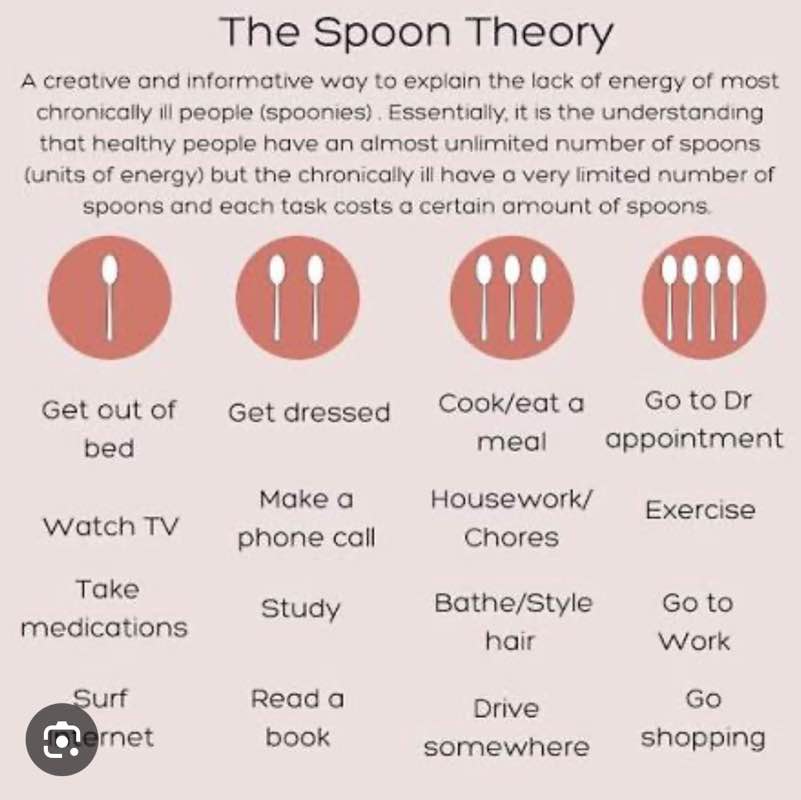
Each "spoon" represents a finite unit of physical or mental energy. While healthy individuals might start their day with a seemingly unlimited supply of spoons, people with chronic conditions begin with a limited, often unpredictable, number.
* **Cost of Activities**
Every daily task, no matter how small, "costs" a certain number of spoons. Simple things like getting out of bed, showering, or getting dressed might use one or more spoons. More complex tasks like working, socializing, or managing pain can consume many more.